Most booking widgets treat every service the same way: a name, a price, a checkbox. The customer picks what they came for and moves on. But some of the most valuable upsells never happen simply because nobody thought to offer them at the right moment. Special Offers changes that.
What Special Offers Does
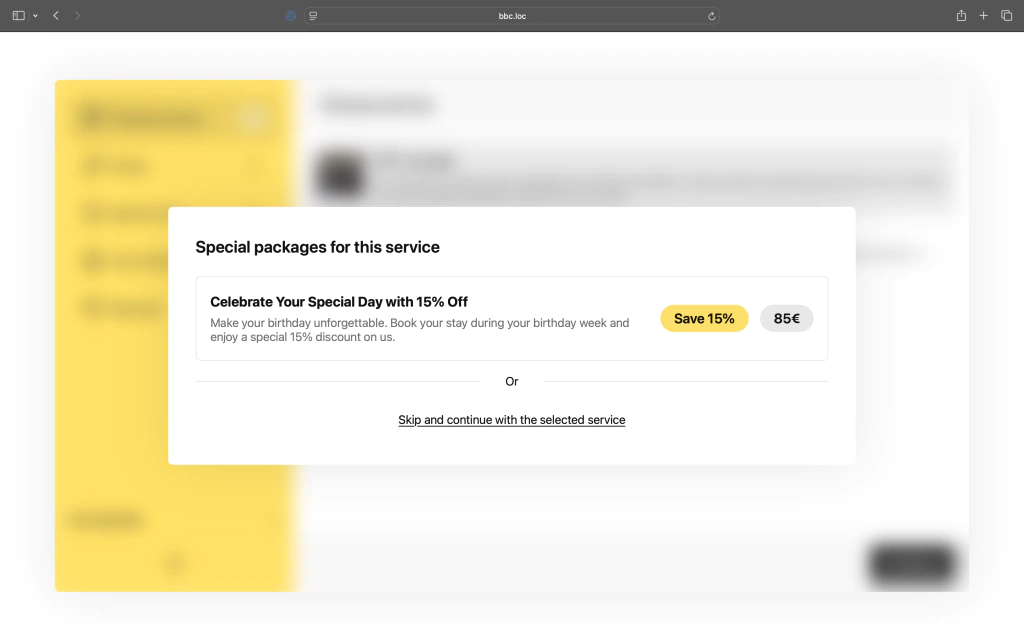
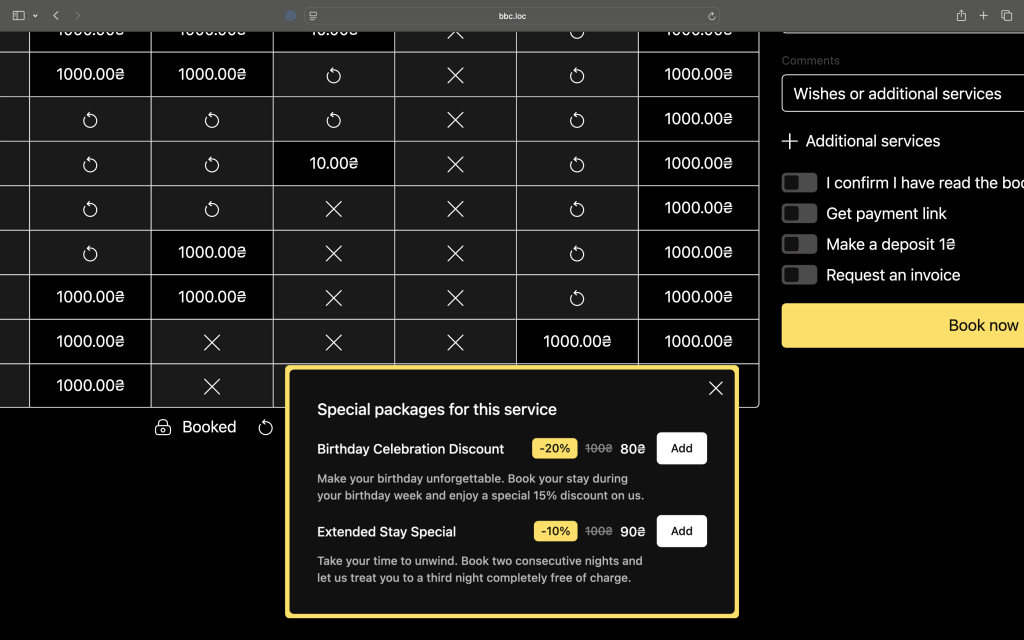
Special Offers is a built-in feature of the additional services system. Any additional service, a paper backdrop roll-out, an extra hour of studio time, a piece of lighting gear, can be marked as a special offer. Once enabled, that service no longer waits passively in a list. Instead, it appears as a targeted popup the moment a customer selects a related main service, presented as a limited, relevant suggestion rather than another line item to scroll past.
Instead of hoping a customer notices an add-on buried in a long list of options, the business gets to put the right offer in front of the right person at the exact moment they’re already engaged and making decisions.
Built Around a Real Use Case
The feature is refreshingly practical. Every field maps directly to a real business decision:
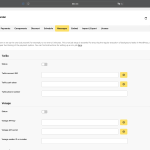
Who is this for. A short, plain description of the target audience, “Students & seniors,” “First-time bookings,” “Weekend sessions only.” This isn’t a backend label. It’s shown directly on the offer card, so the customer immediately understands why they’re seeing this particular deal.
Discount. A simple percentage off the additional service’s normal price, applied automatically when the offer is accepted.
Expiration date. Offers can run indefinitely or be set to expire automatically. Once the date passes, the offer simply stops appearing, no manual cleanup required.
Categories. Additional services are organized into categories (audio equipment, backdrops, lighting, photo and video gear), so special offers stay organized and relevant even as a business’s service catalog grows.
Why This Matters for Conversion
Discount popups have a bad reputation, mostly because most of them are generic, untimed, and irrelevant to what the customer is actually doing. Special Offers avoids all three problems by design:
- It’s contextual. The offer only appears after a customer selects a related main service, so it’s never a random interruption.
- It’s targeted. The “who is this for” field means the offer explains itself instead of feeling like a generic discount blast.
- It’s temporary. An expiration date creates natural urgency without requiring a business to manually track and disable outdated promotions.
For a studio, salon, or service business, this turns what used to be a static “extras” list into an active sales tool, one that surfaces the right add-on at the moment a customer is most likely to say yes.
A Feature That Grows With the Business
Because special offers are just a toggle on the existing additional services system, there’s no separate tool to learn or maintain. A business can start with one offer tied to one popular service, then expand as they see what resonates, adding seasonal promotions, audience-specific deals, or limited-time bundles, all from the same interface they already use to manage their service catalog.
Final Thoughts
The gap between “we offer add-ons” and “customers actually buy add-ons” usually comes down to timing and relevance. Special Offers closes that gap by putting the right suggestion in front of the right customer at the exact moment they’re already deciding what to book, turning a passive service list into an active part of the sales conversation.
In this category
-
 Amelio: A Smarter, Smoother Booking Experience for WordPress
-
 Beauty Salon Booking Software for WordPress
-
 Best WordPress Booking Plugins in 2026: 10 Solutions Compared
- Booking Calendar for WordPress: How to Streamline Your Booking Process
- Online Booking Plugin for Photo Studios: Why Your Website Needs It
-
 Photo Studio Booking Software for WordPress
-
 WooCommerce Bookings with Custom Price and Minimum Hours from Product Metadata
-
 WordPress Booking Plugin with Google Calendar - Full Setup Guide (2026)
-
 WordPress Booking Plugin with SMS Notifications: Cut No-Shows with the Right Gateway
-
 Zapier Integration for WordPress Booking Calendar - Automate Every Booking